
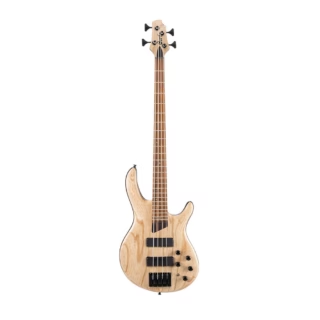
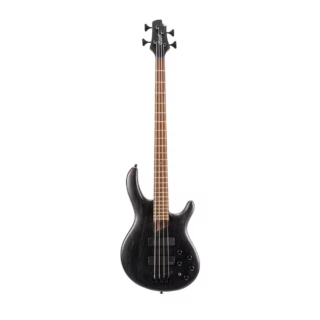
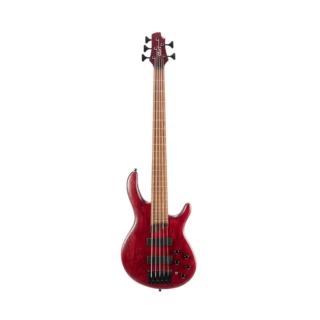
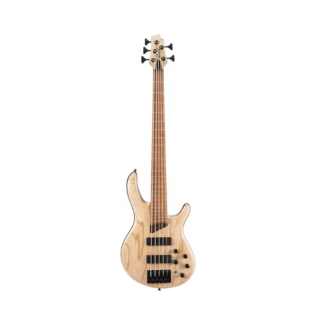
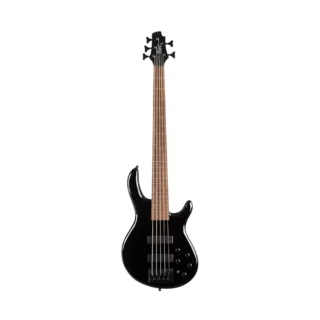
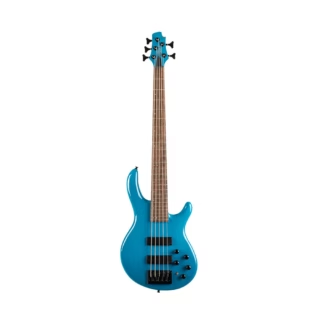
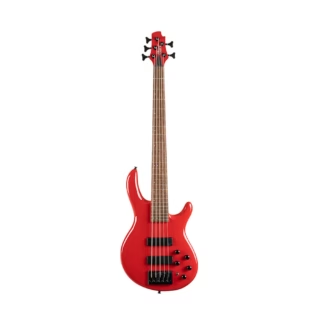
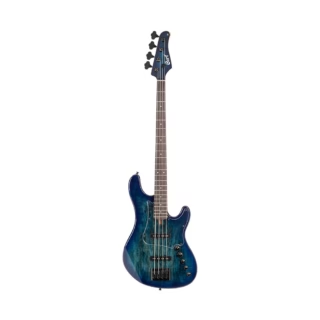
Bass Guitars available from Square Music Company.
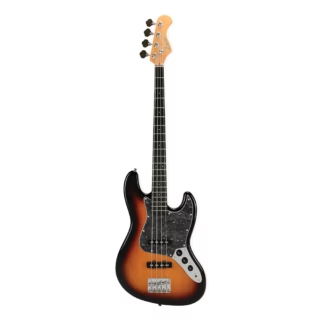
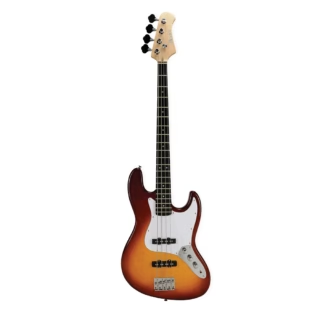
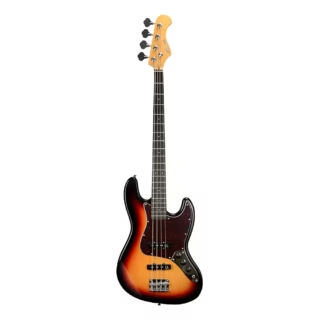
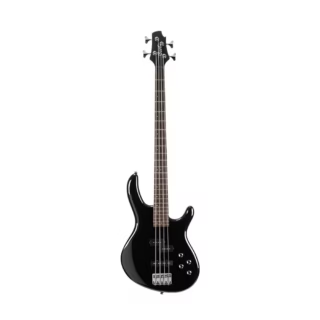
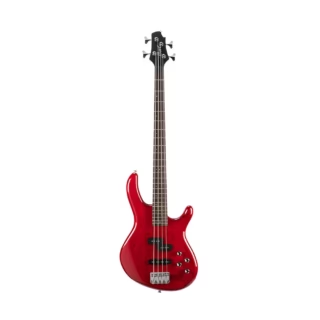
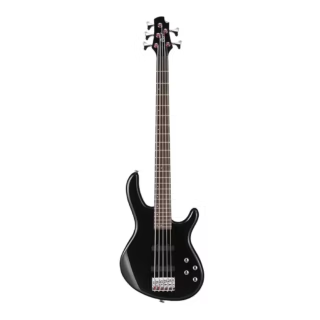
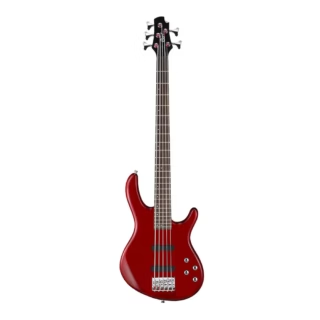
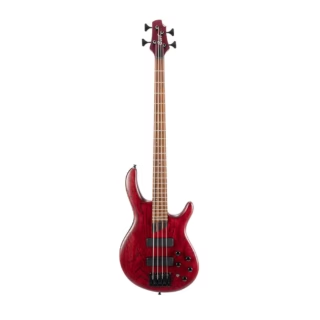
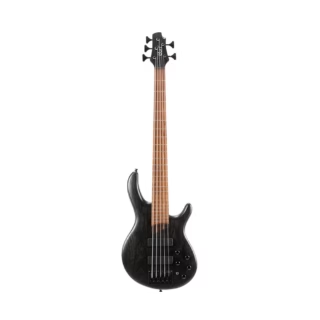
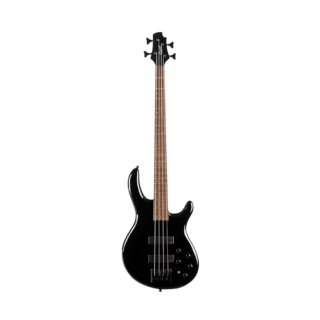
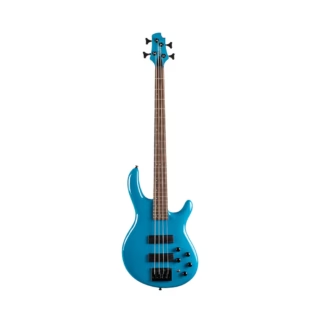
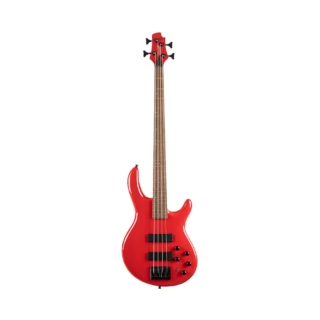
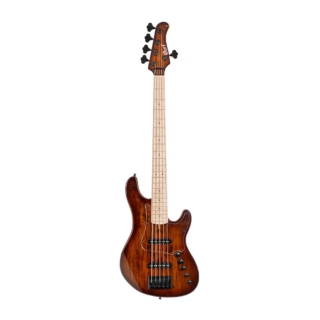
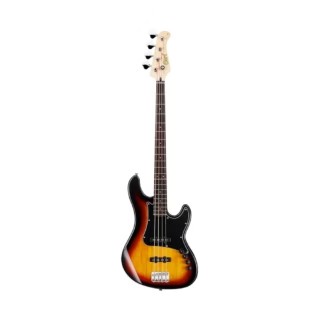

Bass Guitars: Driving the Groove from Past to Present
The bass guitar, often simply referred to as the "bass," is the rhythmic and harmonic backbone of countless musical ensembles. While visually similar to its six-stringed cousin, the electric guitar, the bass is distinguished by its lower pitch, thicker strings, and typically four-string configuration, though five and six-string versions are common. Its primary role is to provide the fundamental low-end frequencies that ground a band's sound, bridging the gap between the drums and the melodic instruments. The bass lays down the rhythmic foundation, often working in tandem with the kick drum, while simultaneously outlining the harmonic progression of a song. Its deep, resonant tones are crucial for giving music a sense of fullness, drive, and stability, making it an indispensable instrument in genres ranging from rock, funk, and jazz to pop, R&B, and even orchestral music. Without the bass, much of popular music would lack its characteristic depth and groove.
The emergence of the bass guitar is intrinsically linked to the evolution of music in the 20th century and the need for a portable, amplified low-end instrument. Before the bass guitar, upright acoustic basses (double basses) filled this role in jazz, blues, and early rock and roll. However, these instruments were large, cumbersome, difficult to amplify effectively in a live setting, and challenging to transport. The demand for a more practical solution grew as music venues became louder and bands required more projection. In the early 1950s, Leo Fender introduced the Precision Bass (or P-Bass), revolutionizing the music world. The Precision Bass was a solid-body electric instrument with frets, making it easier for guitarists to transition to and play in tune compared to the fretless upright bass. It was also easily amplified, portable, and durable. This innovation quickly caught on, providing a consistent and powerful low-end that helped define the sound of rock and roll and many other emerging genres. The Fender Jazz Bass, introduced a decade later, offered a different tonal palette and ergonomic design, further cementing the electric bass's place in popular music and inspiring countless variations and innovations from other manufacturers worldwide.
The construction of a bass guitar shares many similarities with the electric guitar but is adapted to accommodate its larger size, lower tension, and distinct sonic requirements. Like electric guitars, basses generally consist of a solid body, a neck, a headstock, and crucial electronic components. The body, often crafted from dense woods like alder, ash, or mahogany, provides the resonance and sustain, and its shape is designed for ergonomic playability, whether standing or seated. The neck, typically longer and wider than a guitar neck, is usually made from maple, sometimes with reinforcing rods for stability due to the higher string tension. The fretboard, commonly made of rosewood, maple, or ebony, features larger, wider frets to accommodate the thicker strings and provide comfortable fingering for the lower notes. The headstock, at the end of the neck, houses the tuning machines, which are larger and more robust than those found on guitars, designed to handle the thicker, lower-tension bass strings and provide precise tuning.
The electronics are the heart of the bass guitar's amplified sound. Pickups, similar in principle to those on an electric guitar but designed to capture the vibrations of thicker strings, are positioned beneath the strings. The most common types are single-coil (like on a Jazz Bass) for a punchier, articulate sound, and humbuckers (often found on Precision Basses or active basses) for a fatter, warmer, and hum-cancelling tone. These pickups convert string vibrations into an electrical signal, which then travels through the bass's internal wiring to the control knobs. These typically include volume and tone controls, allowing the player to shape the output. Many modern basses also feature active electronics, incorporating a preamplifier that requires a battery. Active basses offer a wider range of tonal sculpting capabilities, with EQ controls for bass, mid, and treble frequencies, providing greater output and versatility. Finally, the signal from the bass is sent via a cable to a bass amplifier and speaker cabinet, specifically designed to reproduce the instrument's deep frequencies with clarity and power, completing the journey from string vibration to the powerful, foundational sound heard by the audience.