
Acoustic guitars available from Square Music Company.
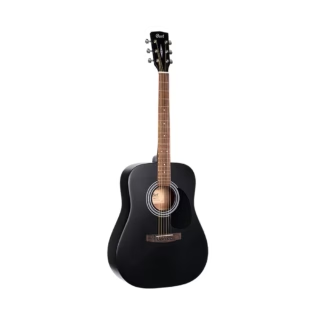
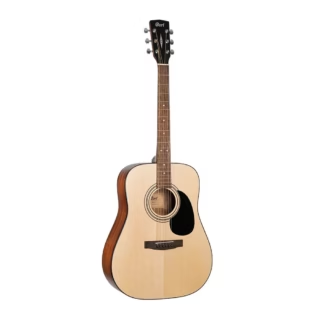
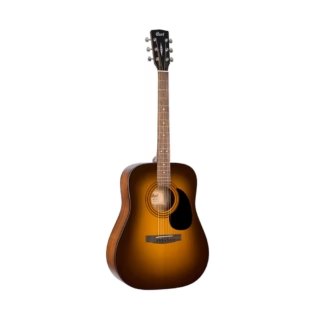
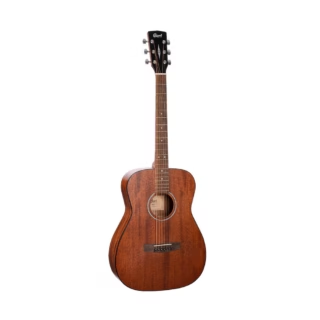
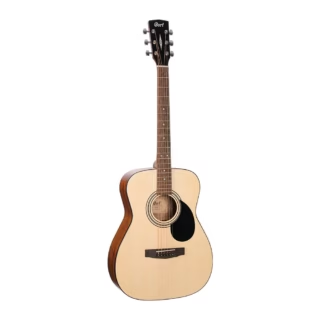

The Acoustic Guitar: A Timeless Instrument
The acoustic guitar, a cornerstone of musical expression across genres and cultures, is an instrument that captivates with its pure, unamplified sound. At its core, an acoustic guitar is a stringed instrument that produces sound through the vibration of its strings, which is then amplified by a hollow soundbox or body. Unlike its electric counterpart, the acoustic guitar requires no external amplification to be heard, making it a truly self-contained and portable instrument. Its rich, resonant tone is a product of its design, where the energy from the plucked or strummed strings is transferred to the guitar's top, or soundboard, causing it to vibrate and push air through the soundhole. This simple yet brilliant mechanical process creates a sound that can be both delicate and powerful, suitable for everything from a gentle fingerpicked melody to a driving chordal rhythm.

The history of the acoustic guitar is a long and fascinating journey, with roots tracing back to ancient stringed instruments. While its direct lineage is debated, instruments resembling the modern guitar can be seen in historical art and texts from various civilizations. The Spanish vihuela and the lute of the Renaissance are often cited as key ancestors, influencing the shape and tuning of the instrument. However, the most significant developments that led to the modern acoustic guitar began in the 19th century. Antonio de Torres Jurado, a Spanish luthier, is widely considered the "father of the modern guitar" for his pivotal innovations. He increased the size of the guitar's body, widened the lower bout, and developed a fan-bracing system for the soundboard. These changes dramatically enhanced the instrument's volume, projection, and tonal balance, laying the groundwork for both classical and steel-string acoustic guitars. The 20th century saw further evolution, with the invention of the dreadnought body shape by C.F. Martin & Company, which produced a louder, bassier sound, making it ideal for accompanying singers and playing in large ensembles.
The construction of an acoustic guitar is a remarkable blend of craftsmanship and physics, involving numerous components working in harmony to produce its signature sound. The body is the most prominent part, typically made from various tonewoods. The soundboard, or top, is the most crucial component, as it is responsible for much of the guitar's tone and volume. Spruce and cedar are common choices for their excellent stiffness-to-weight ratio, which allows them to vibrate efficiently. The back and sides of the body are often made from woods like mahogany, rosewood, or maple, which contribute to the guitar's tonal characteristics, such as sustain and overtone content. Inside the body, a system of internal bracing, often made of spruce, is glued to the underside of the soundboard. This bracing not only provides structural support to the thin top but also helps to shape and control its vibrations, directly impacting the instrument's voice. The neck, which houses the fretboard and frets, is typically made from a strong, stable wood like mahogany or maple. The headstock, at the end of the neck, holds the tuning machines, which allow the player to adjust the tension of the strings and, in turn, their pitch. The bridge, located on the soundboard, anchors the strings and transfers their vibrations to the top. Finally, the nut and saddle, small pieces of bone or synthetic material, support the strings at either end of the fretboard, setting the string height and spacing. Each of these components, from the type of wood to the internal bracing pattern, plays a vital role in creating the unique voice and feel of every acoustic guitar.