
Acoustic Electric Guitars available from Square Music Company.
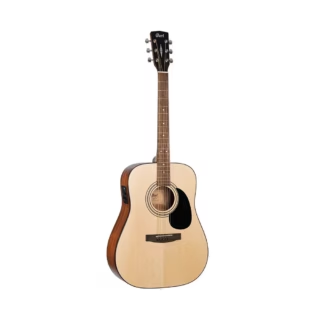
Acoustic Electric Guitar
$359.99 Dreadnought, Open Pore

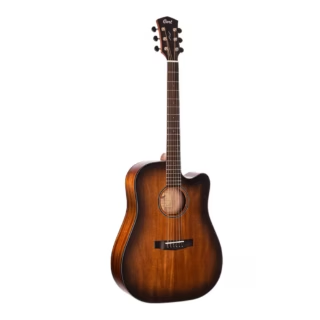
Acoustic Electric Guitar
$899.99 w/Padded Gigbag, Dreadnought, Open Pore Black Burst
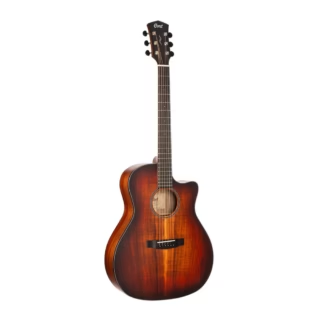
Acoustic Electric Guitar
$999.99 w/Padded Gigbag, Grand Auditorium, Open Pore Light Burst

Acoustic Electric Guitar
$999.99 w/Padded Gigbag, Orchestra, Open Pore Black Burst

Acoustic Electric Guitar
$899.99 w/Padded Gigbag, Orchestra, Open Pore Trans Black
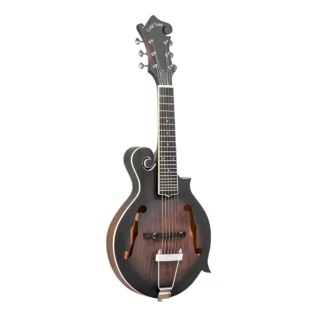
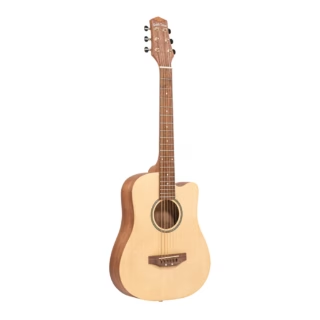
Acoustic Electric Guitar
$533.32
w/Padded Gig Bag, Natural

The Acoustic-Electric Guitar: Blending Tradition with Modern Amplification
The acoustic-electric guitar is a remarkable hybrid instrument that bridges the gap between the traditional acoustic guitar's natural, resonant sound and the amplified power of an electric guitar. At its core, an acoustic-electric is a standard acoustic guitar fitted with electronic components, such as a pickup and a preamp. This allows the instrument to be played unplugged, with its sound projecting naturally through its hollow body, but also to be plugged into an amplifier, PA system, or recording interface for increased volume and tonal control. This dual functionality makes it an incredibly versatile tool for musicians, equally at home in an intimate, unplugged setting as it is on a loud stage or in a studio recording session. The sound produced when amplified can be a faithful reproduction of the acoustic tone, or it can be shaped and modified with effects, offering a wide range of sonic possibilities.

The history of the acoustic-electric guitar is a story of innovation driven by the need for more volume. In the early days of popular music, acoustic guitars struggled to be heard over other instruments in a band setting. The development of electromagnetic pickups in the 1930s for electric guitars provided a solution, and it wasn't long before musicians and engineers began experimenting with ways to amplify acoustic instruments. Early attempts involved placing microphones in front of the guitar, but this was impractical for live performance due to feedback and a lack of mobility. The breakthrough came with the development of various pickup systems that could be installed directly onto or into the guitar. Early adopters in genres like jazz and country found that these amplified acoustics allowed them to take a more prominent role in the band, paving the way for the instrument's widespread adoption. Over time, advancements in technology led to more sophisticated and discreet pickup systems, and by the latter half of the 20th century, major guitar manufacturers were producing acoustic-electric models as a standard part of their product lines, solidifying their place in modern music.
The construction of an acoustic-electric guitar involves the same fundamental components as a traditional acoustic, with the addition of a crucial electronic system. The body, neck, and tonewoods all follow the principles of acoustic guitar building, with a solid or laminated top (soundboard), back, and sides, and a neck with a fretboard and frets. The key differentiator is the onboard electronics. The heart of this system is the pickup, which converts the string and body vibrations into an electrical signal. There are several types of pickups commonly used:
- Piezo Pickups: These are the most common type and are typically located under the saddle (the small strip of bone or synthetic material on the bridge). They work by sensing the pressure and vibrations from the strings, providing a clear and bright, though sometimes percussive, sound.
- Magnetic Pickups: These pickups are installed in the soundhole and work like electric guitar pickups, sensing the vibration of the steel strings. They offer a more "electric" or warm tone and are often more resistant to feedback.
- Microphones: Some high-end systems use a small microphone mounted inside the guitar body to capture a more natural and "airy" acoustic sound.
These pickups are connected to an onboard preamp, which is often mounted on the side of the guitar's body. The preamp boosts the signal from the pickup and provides controls for volume, tone (EQ), and sometimes a built-in tuner. This allows the player to shape their amplified sound without needing to access an external device. The signal is then sent to an output jack, typically located at the strap button at the bottom of the guitar, which allows for connection to an amplifier or a sound system via a standard guitar cable. This clever integration of acoustic and electronic elements makes the acoustic-electric guitar a powerful and practical choice for the modern musician.